

Overview
1.-MONDAY- GENOVESA ISLAND: Darwin Bay – El Barranco (Escalones del Príncipe Philip)
2.-TUESDAY – SANTA CRUZ ISLAND / SANTIAGO ISLAND
3.-ISLA ISABELA: Humedales / Volcán Sierra Negra – Centro de Crianza de tortugas gigantes/ Muro de las Lágrimas
4.-THURSDAY – ISABELA ISLAND: Bahía Elizabeth – Bahía Urbina
5.-FRIDAY – ISLA ISABELA: Caleta Tagus – ISLA FERNANDINA: Punta Espinoza
6.-SATURDAY – SANTIAGO ISLAND: Caleta Bucanero/ Playa Espumilla – RÁBIDA ISLAND
7.-SUNDAY – Mosquera Island – BALTRA AIRPORT
Itineraries are subject to change without prior notice due to weather conditions, regulations of the National Park, onboard emergencies, or any unforeseen situations.
| ITINERARY A – 7nights – Sunday/Sunday | Double (p/p) |
| Golden Suites | USD$ 9.490 |
Itinerary
Day 1 :
MONDAY -GENOVESA ISLAND: Darwin Bay - El Barranco (Escalones del Príncipe Philip)
In the morning, visit Darwin Bay, the only sandy beach found in Genovesa's caldera. It is home to colonies of great frigatebirds, with males displaying their red throat pouches to attract mates. Red-footed boobies also nest in trees, unlike the other two booby species that nest on the ground.
In the afternoon, head to El Barranco (Prince Philip's Steps), a stone-carved staircase leading to a wide plateau. Here, you can observe large colonies of Nazca boobies, frigatebirds, storm petrels, and pintails. A simple walk through a small scalesia forest presents an opportunity to spot the short-eared owl. The same path will lead you back to your boat.
(B, L, D)
Day 2 :
TUESDAY - SANTA CRUZ ISLAND / SANTIAGO ISLAND
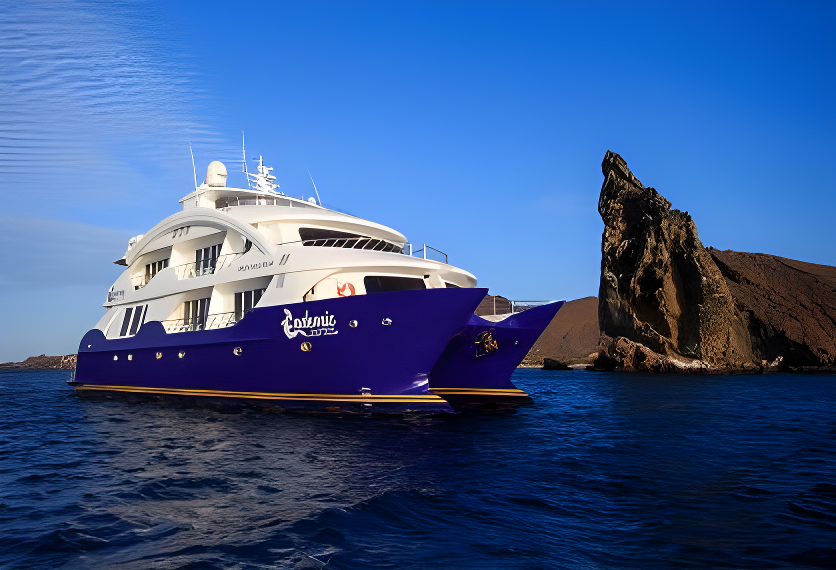
In the morning, after breakfast, visit the Twin Craters on Santa Cruz Island. These scenic craters, approximately 30 meters deep, are surrounded by a Scalesia forest teeming with birds like the Maria canary and the Galapagos hawk. Witness the iconic Galapagos giant tortoises in their natural habitat, along with other wildlife like short-eared owls, Darwin's finches, and more. Explore underground lava tubes formed by cooled and solidified lava before boarding the M/C Endemic.
In the afternoon, visit Sullivan Bay on the eastern coast of Santiago Island. Walk on white coral sand and hike across lava flows that are less than 100 years old, providing an insight into the volcanic origins of the Galapagos. Witness the unique flora thriving in the lava fields during this remarkable experience.
(B, L, D)
Day 3 :
WEDNESDAY - ISLA ISABELA: Humedales / Volcán Sierra Negra - Centro de Crianza de tortugas gigantes/ Muro de las Lágrimas
Isabela Island is the largest in the archipelago, covering 4,588 square kilometers and comprising over half of the total land area of the Galapagos.
In the morning, you can explore the Wetlands, a 6-kilometer trail complex located in the southern part of Isabela Island. It offers a diverse range of flora and abundant birdlife, including finches, teros, and ducks.
Alternatively, you have the option to visit Sierra Negra volcano, one of the largest craters in the archipelago, with a diameter of five kilometers. The volcano provides captivating views with striking contrasts between lava fields, vegetation, and fumaroles. Along the way to Orchilla Hill, you might encounter giant tortoises and marine iguanas. From the viewpoint, you can admire the spectacular landscape of the bay, Puerto Villamil town, volcanoes, islets, and rocks.
After lunch, visit the Giant Tortoise Breeding Center on Isabela Island, where you can see baby and juvenile giant tortoises until they are ready to be released into the wild.
Alternatively, explore the Wall of Tears, a man-made monument built in the 1940s by prisoners when Isabela Island was an Ecuadorian penal colony, and the wall's construction was part of their punishment.
On the way back to the yacht, be prepared to spot flamingos and other waterbirds.
(B, L, D)
Day 4 :
THURSDAY - ISABELA ISLAND: Bahía Elizabeth - Bahía Urbina
In the morning, explore Elizabeth Bay, a marine visitor site. The zodiac boat tour starts with a visit to Marielas Islets, home to the largest and most important penguin colony in the Galapagos. The excursion continues to the cove surrounded by red mangroves, where you can spot marine turtles, flightless cormorants, spotted eagle rays, golden rays, and sea lions.
In the afternoon, visit Urbina Bay, known for its coral formations and colorful land iguanas. There's a chance to encounter giant tortoises, flightless cormorants, blue-footed boobies, penguins, and marine iguanas.
(D, A, C)
Day 5 :
FRIDAY - ISLA ISABELA: Caleta Tagus - ISLA FERNANDINA: Punta Espinoza
After breakfast, the first attraction to visit is Caleta Tagus. A ride on an inflatable boat along the cliffs offers a great chance to see Galapagos penguins, flightless cormorants, and other seabirds. A 30-minute hike from the landing site leads to the top of the cliff, providing views of Darwin Lake, a saltier lake than the sea, and several volcanoes.
After lunch, you will visit Punta Espinoza, a visitor site on Fernandina Island. It features a fascinating lava landscape with lava cacti and thriving mangroves. Highlighted sightings include sea lions, penguins, flightless cormorants (especially in spring and summer), and one of the largest iguana colonies in the Galapagos.
(B, L, D)
Day 6 :
SATURDAY- SANTIAGO ISLAND: Caleta Bucanero/ Playa Espumilla - RÁBIDA ISLAND
In the morning, explore Caleta Bucanero, located just north of James Bay. This area served as a safe haven for pirates in the 17th and 18th centuries to hide their loot, obtain fresh water, and capture turtles for sustenance. Enjoy a zodiac ride, snorkeling, and kayaking, with sightings of blue-footed and Nazca boobies, sea lions, and Galapagos hawks soaring above.
Alternatively, visit Espumilla Beach, a stunning sandy beach and a popular spot for marine iguanas and rays. The presence of crabs attracts hunting herons, creating a predator-prey dance. Snorkeling is recommended to witness abundant marine life, such as octopuses, moray eels, and sharks.
In the afternoon, head to Rábida Island, where the main attraction is the red sandy beach, famous for its cactus forests and rocky formations, along with native and endemic species. During the beach walk, observe brown pelican nests and a lagoon where flamingos are occasionally spotted.
(B, L, D)
Day 7 :
SUNDAY - Mosquera Island – BALTRA AIRPORT
In the morning, visit Mosquera, a small islet located between Baltra and North Seymour Islands. This sandy island, spanning over 600 meters, is inhabited by seagulls, sea lions, and rays. It hosts the largest populations of sea lions and occasionally offers sightings of killer whales, depending on the season.
After this final visit, you will be transferred to Baltra Airport for your return flight to the mainland of Ecuador. Assistance and farewell at the airport.
(B, -, -)
Cruise Rates Include
- Transfers Airpot/ Yacht/ Airport in Galapagos
- Activity daily briefing
- Airport reception and assistance
- All meals and snacks & Soft drinks and juices
- Double accommodation
- Soft drinks and juices
- Guides expeditions according to the itinerary
- Captain's welcome and farewell cocktail
- Top bilingual National Park guide (English-Spanish)
- Expedition gear and Yoga mats
- Cruise Service Officer
- Use of seakayaks and paddle boards
- Kettlebells and dumbbells
- Stargazing laser pointer
Cruise Rates Do Not Include:
- Round flight to Galapagos
- Galapagos National Parck fee ($100 – subject to change)
- Transit Control Card ($20 - subject to change)
- Alcoholic beverages
- Gratuities for guide and crew
- Travel and health insurance
- Micro SD Card 4K
